Grounded in catalog maintenance
The app is described through product families, typed attributes, variants, categories, relationships, and lifecycle state.

Create a governed product source with reusable structure, fast bulk editing, readiness status, and the context every downstream output needs.
Generic records break down when products have variants, technical specifications, accessories, market content, and different lifecycle stages. Utomo gives those relationships a durable structure.
Clear product pages should show how the app works, where it fits, and what keeps the information controlled.
The app is described through product families, typed attributes, variants, categories, relationships, and lifecycle state.
Readers can see exactly how product records are structured before that data moves to assets, content, channels, or partners.
Products is positioned as the source that feeds Articles, Channels, Shop, Partner, and Sustainability workflows.
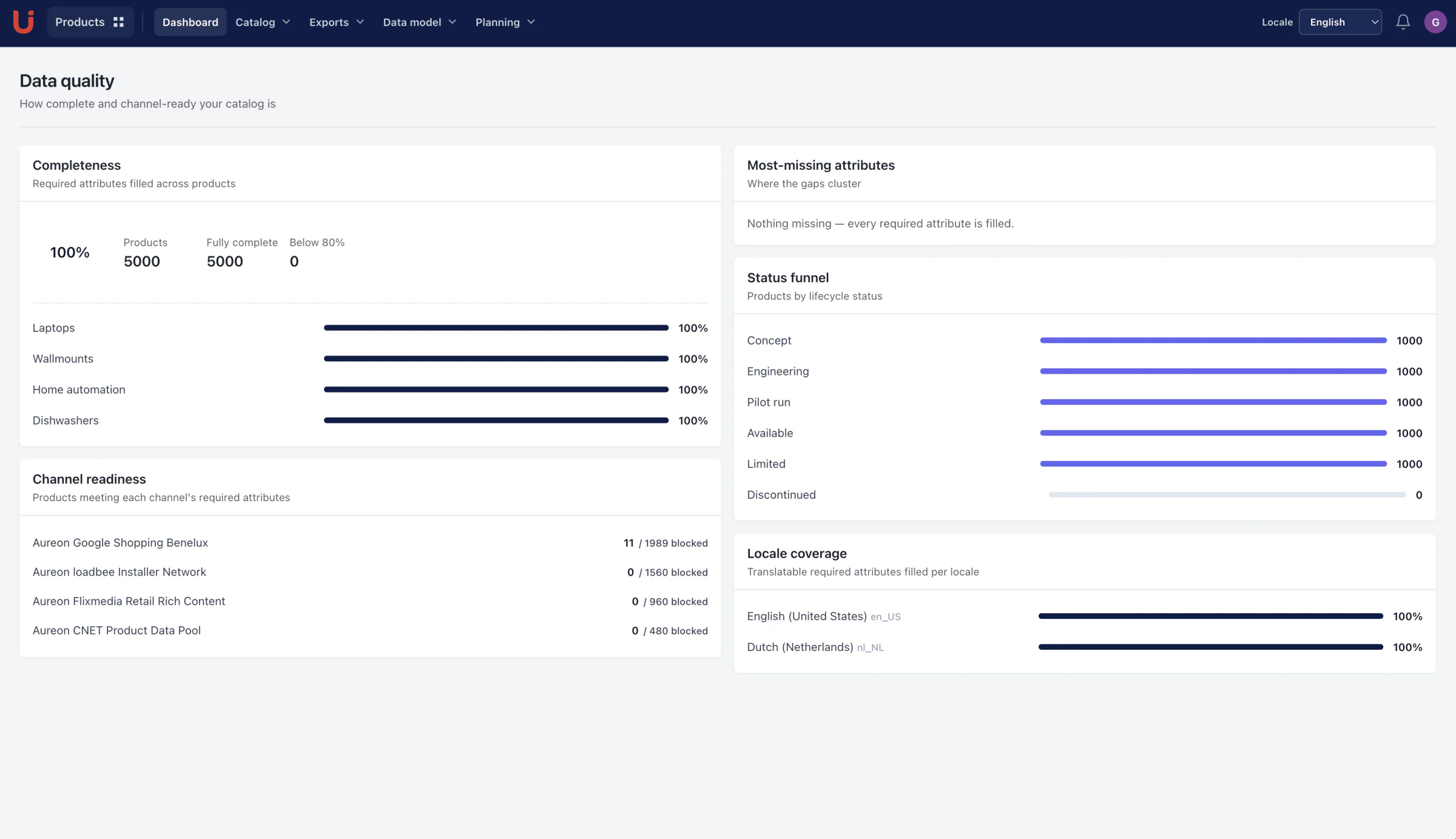
Completeness, readiness, lifecycle state, and edit history give teams a controlled way to trust product data.
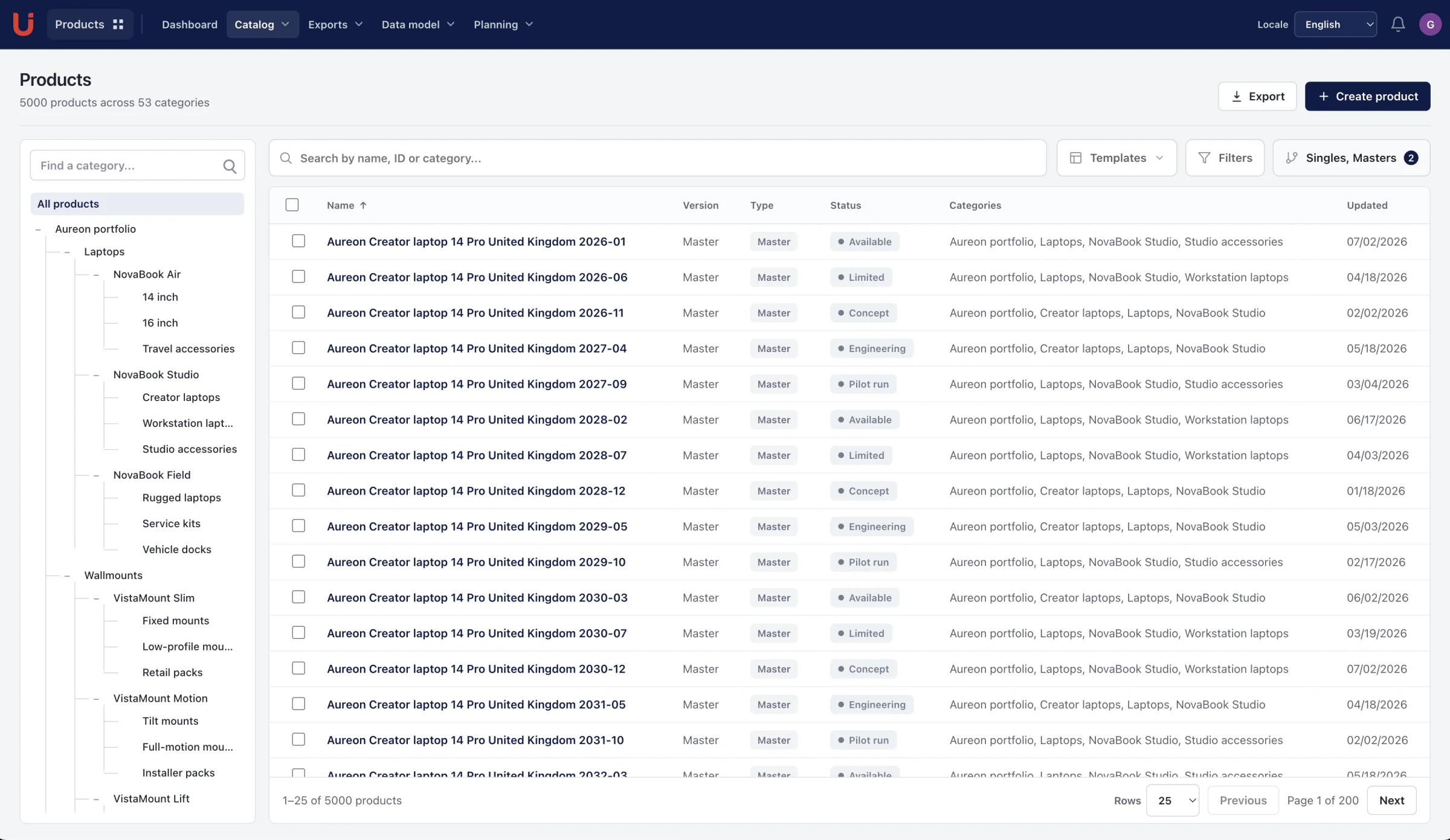
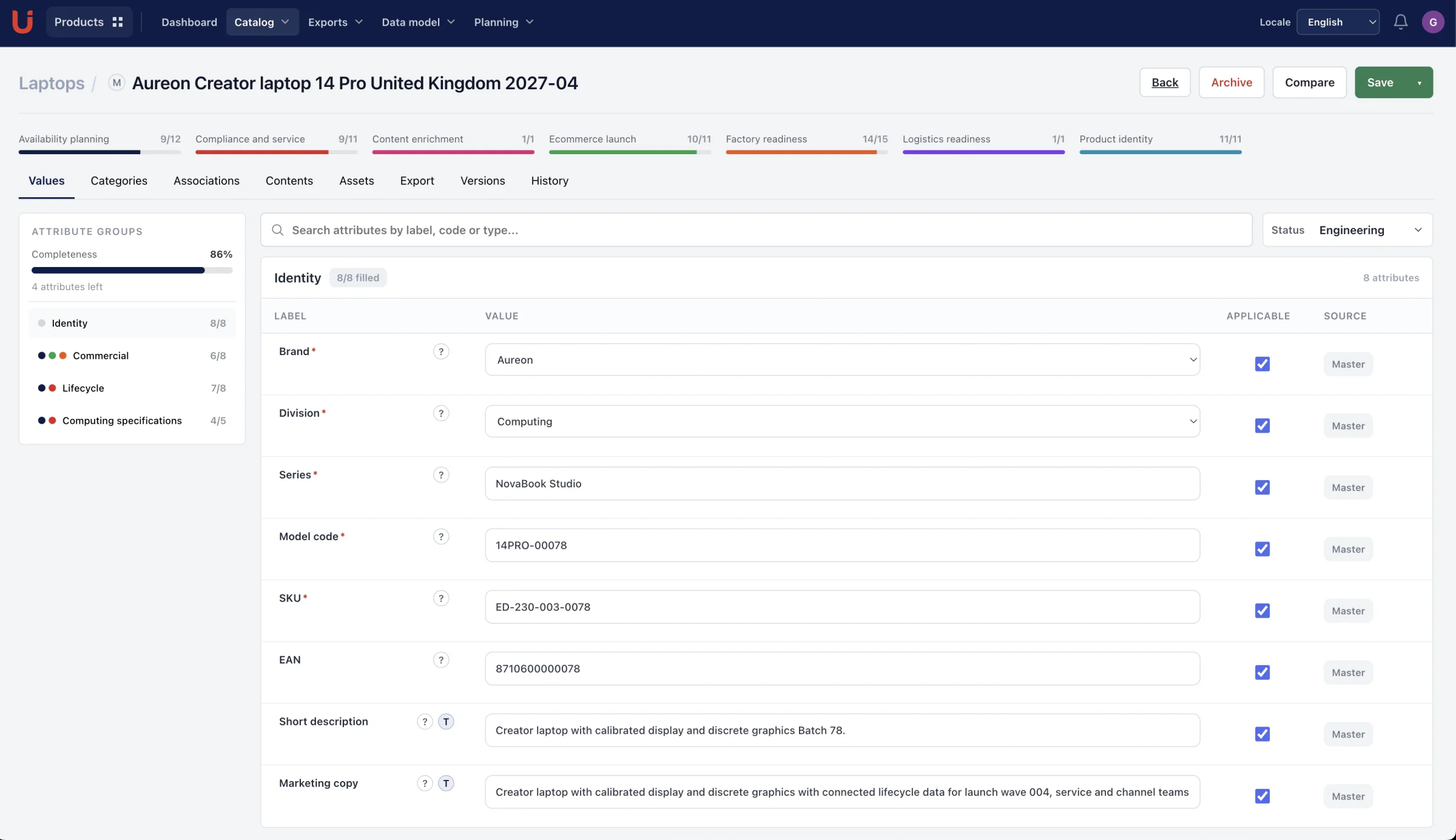
Manage names, descriptions, identifiers, GTINs, variants, categories, and lifecycle status in one record.
Use typed attributes and attribute sets to keep specifications, dimensions, materials, and compliance fields consistent.
Build category trees and connect accessories, related products, cross-sells, spare parts, and bundles.
Use spreadsheet-style grid templates to review and edit many products without exporting the catalog to a fragile file.
See product completeness, channel readiness, lifecycle status, and edit history before information moves downstream.
Connect rich content, translations, documents, and assets to the structured records they describe.
A consistent structure makes every later publication, feed, and launch workflow easier to manage.
Create product families with the fields and relationships that matter.
Place products in category trees and connect variants and associations.
Add the commercial, technical, localized, and media content teams need.
Use status and completeness to decide when the product can move to output.
These are implemented Utomo capabilities, not roadmap promises or third-party network claims.
Use the 30 day trial to validate the structure, content, output, and governance your team needs.